Playfulness as Resistance: Joyful Technology for Collective Healing
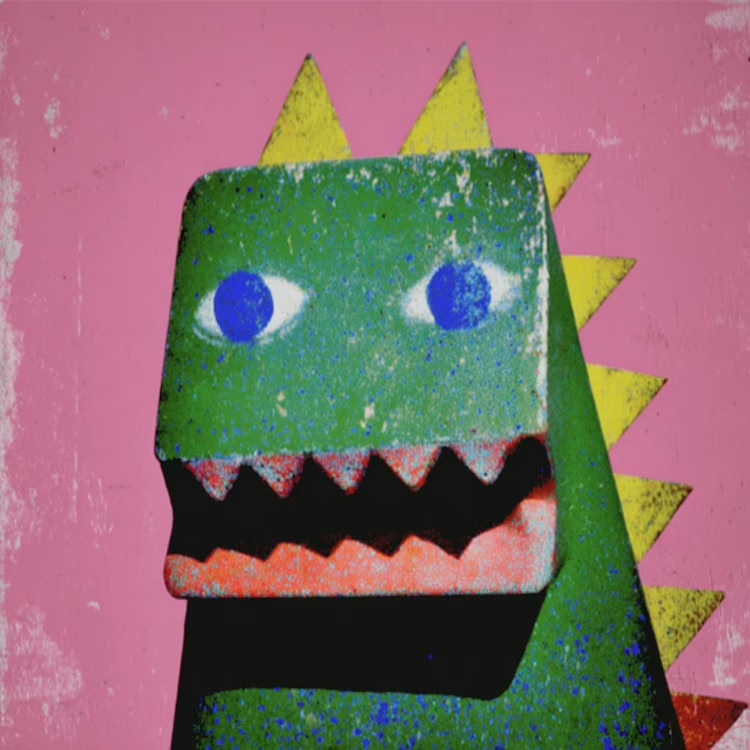
There is a way children tell stories before they learn to hesitate. When my seven-year-old describes a fox that lives under the moon or a pirate who hates mangoes, he does not pause to check if it sounds practical. He simply says it. The idea stands on its own. In a recent session of my Generative AI Readiness course, I shared how I used Midjourney with him to bring those stories to life. Not as publishable art. As validation. His idea comes out of his head, returns through a screen, and meets him again in color. That moment is not technological. It is relational. It tells him his imagination is worth returning to. We went further. He had drawn a character in crayon one afternoon. We scanned it, fed it through Sora to animate the scene, then created a song in Suno to match the tone of his story. We pulled the visuals and audio together in Canva and watched it as if it were a small film. You could see the impact on his face. Not just pride, but recognition. That at the tender age of seven, he can make something, and that making can move others. Adults need that just as much as children do. For most people, play has become something optional. A reward if there is time, a release valve at best. In high-pressure environments, it is often dismissed as unserious. Yet during periods of strain, play is one of the clearest indicators that a system still has elasticity. When play disappears, collapse accelerates. AI can contribute to that collapse when used only for efficiency, optimization, and output. It can also interrupt it when applied to restore curiosity, spark humor, and invite low-stakes creation. These are not side benefits. They are protective measures. Play strengthens the cognitive and emotional fibers we rely on to survive difficulty without surrendering resilience. Playfulness is not an escape from responsibility. It is what makes responsibility endurable.