From the Dinner Table to the Policy Table: What We Took Away from the Goodie Nation x The AI Salon World Cup Dinner in Dallas
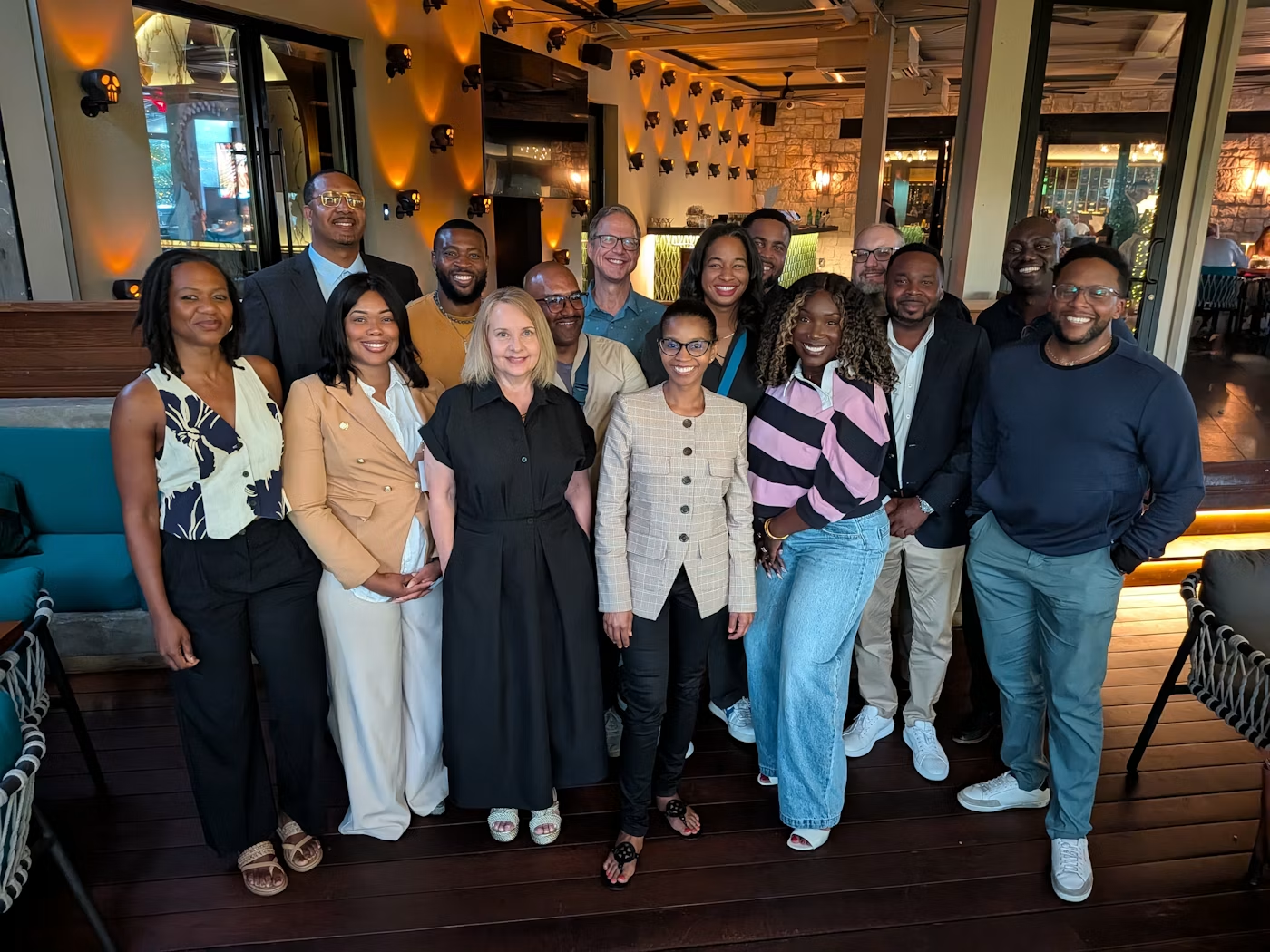
The world may be turning its attention to North Texas for the 2026 FIFA World Cup, but in Downtown Dallas the future being discussed was bigger than what happens on the pitch.
At The Mexican, over fantastic food, sharp drinks, and the kind of conversation that makes you forget to check your phone, Goodie Nation and The AI Salon brought together founders, builders, community leaders, and ecosystem connectors for a dinner focused on AI, infrastructure, and the future of work.

Kellye Kamp and I were grateful to attend alongside other representatives from The AI Salon and Goodie Nation, and what stood out most was how quickly the conversation moved beyond hype. This was not a room asking whether AI is coming. The better question, and the one that kept surfacing throughout the night, was “Who gets to shape what happens next?”
AI Is Happening at the Local Level
One of the clearest themes from the evening was that AI is not just being shaped in Silicon Valley, Washington, or inside the boardrooms of the largest technology companies.
It is being shaped in classrooms. It is being shaped in startups.
It is being shaped by local entrepreneurs trying to solve real problems.
It is being shaped by community builders who see both the opportunity and the risk up close.
When AI systems are deployed without care, oversight, or lived context, the potential for harm scales quickly. The same systems that can improve access, efficiency, education, and opportunity can also deepen inequity if marginalized populations are treated as edge cases instead of central stakeholders.
As the drinks flowed, so did the conversation, ranging from policy to education to regulation. The thread running through all of it was simple: we need more people in the room who understand what is happening on the ground.
Jon Potter from The AI Salon captured it perfectly when he said, “The policymakers need to hear more of the good stories that are happening at the local level.”
Too often, policy is shaped by fear stories, failure stories, and worst-case scenarios. Those stories are important, especially when real harm is possible. But if policymakers only hear about what can go wrong, they miss the other half of the picture: the founders, educators, technologists, and community leaders using AI thoughtfully, responsibly, and creatively to make something better. Good regulation should protect people from harm without cutting off the builders who are already doing the work with care.
That balance is hard, but it becomes insurmountable if the people building responsibly never tell their stories.
The Builders Are Already Building

One of my favorite examples from the evening came from new Salon member Bostic Poindexter, who shared how he used time during COVID to teach himself about finance. That learning journey has now evolved into a board game with an AI-powered digital experience designed to teach financial literacy to teens and adults.
That is exactly the kind of story more people need to hear.
It is easy to talk about AI in abstract terms: models, agents, automation, disruption, job loss, regulation, compute, copyright, infrastructure. But then someone tells you they are using AI to help a teenager understand money before the world teaches them through overdraft fees, credit card debt, or predatory lending, and suddenly the conversation gets real.
Regulation Needs More Than Reaction
A major part of the conversation focused on regulation, and there was broad agreement that AI systems cannot be left unchecked. When tools can influence hiring, lending, education, healthcare, housing, policing, media, and public services, “move fast and break things” is not a sufficient philosophy.
At the same time, the room also understood that regulation built without founders, educators, and local builders can unintentionally create new barriers. If only the biggest companies can afford to comply, then we risk concentrating even more power in the hands of the few.
That is why local voices matter.
The people closest to the problems are often closest to the most practical solutions. They can help policymakers understand what is real, what is theoretical, what is urgent, and what needs more nuance.
The future of AI policy cannot be written only by those reacting to harm after it happens. It also has to be shaped by those building better models, better products, better learning experiences, and better community infrastructure before the harm scales.
The Table Is the Starting Point

The dinner at The Mexican was warm, generous, and energizing. The food and drinks were fantastic, but the real value was the room itself: founders comparing notes, community leaders connecting dots, and people from different corners of the ecosystem realizing they were asking many of the same questions.
How do we prepare students for an AI-shaped future?
How do we make sure smaller builders are not regulated out of the game?
How do we protect marginalized communities from systems that can cause harm at scale?
How do we tell better stories about the good already happening locally?
How do we make sure the people affected by AI have a voice in how it is governed?
None of those questions have easy answers. But they do have a starting place.
Goodie Nation and The AI Salon Are Playing the Same Kind of Game
Goodie Nation has long focused on closing the Relationship Gap for promising innovators by connecting founders, funders, community builders, and supporters across the innovation economy. The AI Salon is built around a similar belief that the future of AI should not be left to a small group of insiders. It should be explored, questioned, built, and shaped by a wider community of thoughtful humans.
If you are a founder, builder, educator, investor, policymaker, community leader, or simply someone trying to understand how AI will impact your work and your neighbors, there is a place for you in this conversation.
Get involved with The AI Salon.
Get involved with Goodie Nation.
Tell the good stories happening in your city.
Ask hard questions about the systems being built around you.
Help make sure the future of AI is not something that happens to communities, but something built by them, with them, for them.
Because the game is already in motion.
Now we need the right people on the field.
