MAICON 2026 Day One: Cleveland Turns Up the Volume on AI’s Human Future
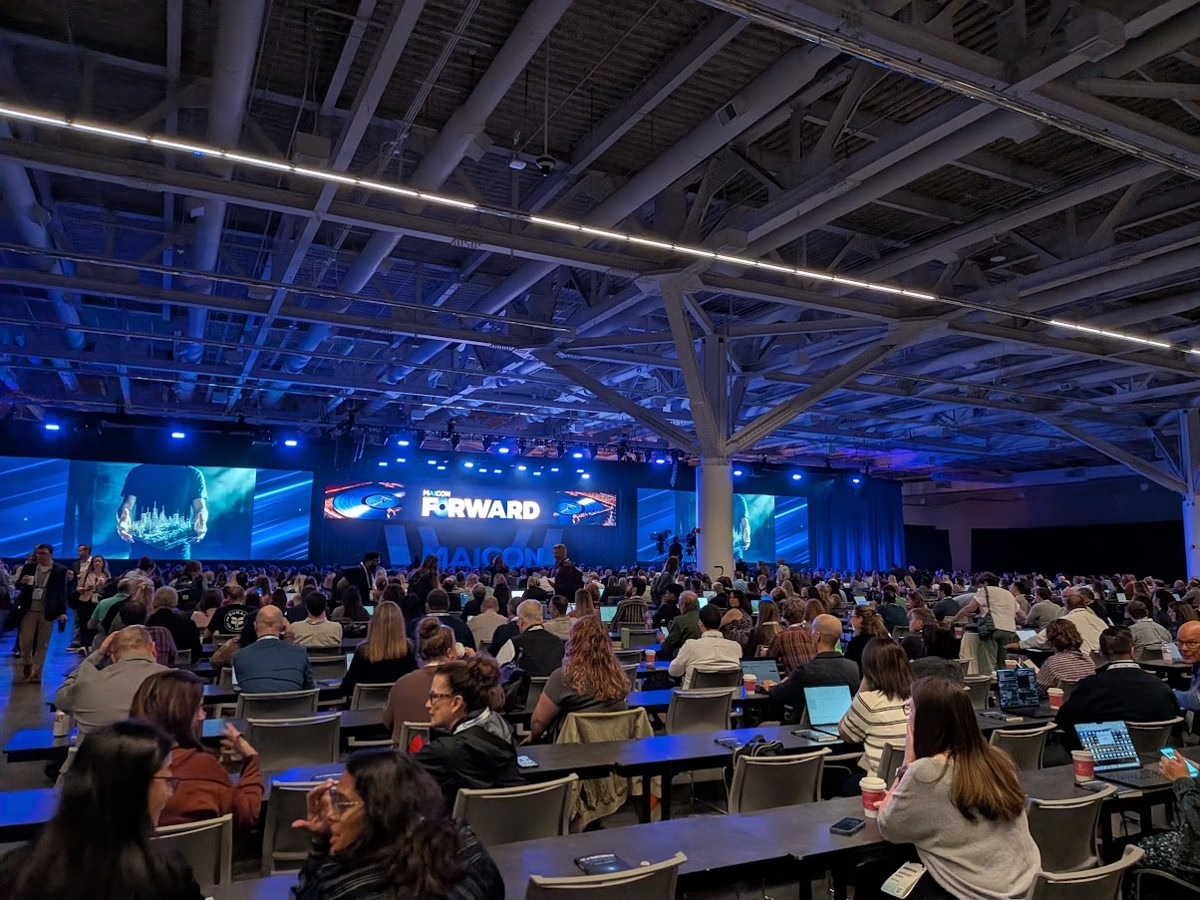
Nearly 2,000 people, a growing collection of AI agents, and one persistent question: How do we help people thrive through all this change?
By Brandon Tidd | AI Salon
The Marketing Artificial Intelligence Conference, or MAICON, created by Marketing AI Institute and backed by SmarterX, is back at the Huntington Convention Center. It feels bigger, busier, and more ambitious than ever. Paul Roetzer put some numbers behind that impression in his opening remarks: nearly 2,000 attendees, 48 states, and more than 25 countries represented. They’ve come a long way from their first gathering of roughly 350 people in 2019.
Paul Roetzer’s opening question: Where will the next generation learn?
Roetzer began by looking backward, to his first job at a local marketing and PR firm in 2000. He learned to write press releases, build proposals, research, and work through problems by trial and error. His early ambition was wonderfully recognizable: hand something to his boss and get it back without red marks. Those assignments generated revenue for the firm. They also developed a professional.
Now, he argued, AI can handle much of that foundational production. A senior employee can move from an idea to a plan, first drafts, and campaign assets with far less assistance. The efficiency is real. So is the question it leaves behind: If the work that once trained junior employees disappears, how do those employees develop expertise?
His proposed framework gave the keynote its title: the architect, the orchestrator, and the apprentice. The architect designs how people and AI work together. The orchestrator directs systems, evaluates results, and makes decisions about quality, data, and oversight. The apprentice develops judgment through observation, experimentation, and collaboration with both humans and AI.
Roetzer presented this as a framework to investigate, with questions still open. The familiar career ladder needs attention now, before organizations discover they have optimized away the place where future leaders used to begin. And there was a distinctly Cleveland origin story tucked inside the talk. He described how a visit to NASA Glenn Research Center, including an encounter with an apprentice, helped spark his thinking. A conversation about the future of marketing had found inspiration in a place that builds and tests things intended to leave Earth.
That feels appropriate here. Cleveland’s experience runs deep in work that requires skill, practice, mentorship, and a willingness to learn how something actually functions.
The challenge Roetzer put to business leaders was to use AI’s gains to invest in future capability. Training someone to assess an answer, ask a better question, understand a customer, and exercise good judgment requires intention. A software subscription alone will not create that apprenticeship.
From the CEO’s seat, urgency meets permission to play
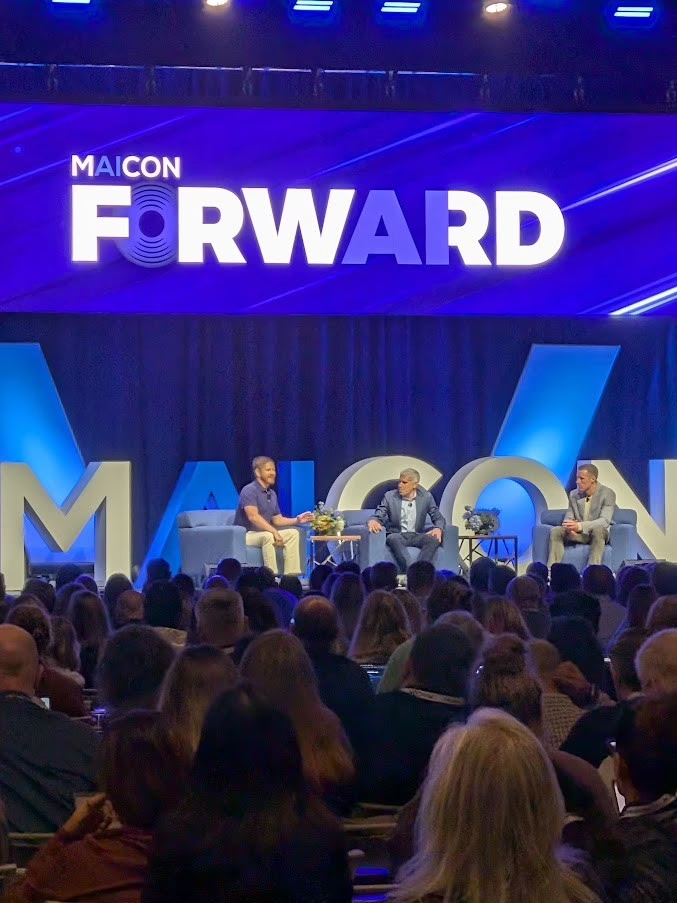
Craig Karmazin and Ty Bauschek followed Roetzer with a view from inside a company doing the work. Joined by Mike Kaput, they described AI adoption at Good Karma Sports, the sports media business formerly known as Good Karma Brands.
Karmazin’s initial message to employees was blunt: the company needed to embrace AI to secure its future. Bauschek said he had never logged into an AI tool before that call. He now leads the company’s innovation effort.
What made the story useful was what followed the mandate. Employees received licenses and room to experiment. Bauschek described having “permission to play” and “permission to fail.” The company wanted people doing the work to help discover where AI could improve it.
The panel also left room for correction. Karmazin acknowledged that his original warning about everyone needing AI had been too broad. He pointed to Cleveland broadcaster Tony Rizzo as an example of human talent with its own enduring value.
Bauschek’s advice was to have “patience urgently.” It captured the tension many attendees are living with: move with purpose, keep teaching the basics, and recognize that changing how people work takes repeated attention.
Izabelle Macedo makes room for the magic
Google’s Izabelle Macedo brought the discussion back to marketing’s daily contradictions. Build a distinctive brand. Deliver measurable results. Reach niche communities. Do it at scale. AI enters a profession that is already dealing with a lot of moving parts.
Macedo’s argument was that technology can help people handle that complexity while protecting the qualities that make their work distinctive: judgment, experience, curiosity, creativity, and connection.
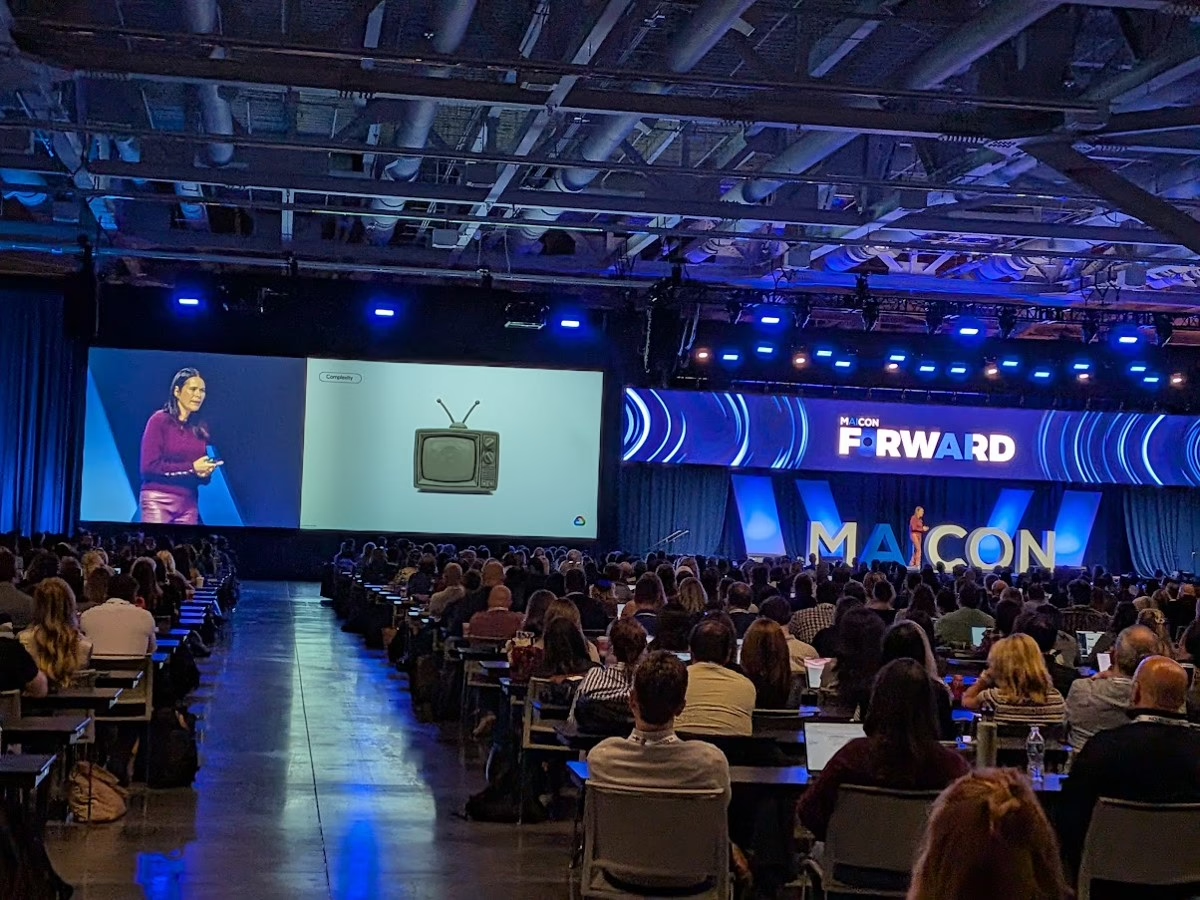
Don’t put AI to work on something that you could have already done yourself.
She followed that with an invitation to pursue something the person and the AI could not have accomplished alone. That opens up a more interesting conversation than a simple calculation of hours saved. What could a team understand, test, or create that previously sat beyond its capacity?
Kevin Roose brings the frontier a little closer to home
Kevin Roose, who grew up just outside of Cleveland, unpacked the phrase “feeling the AGI.” He described it as internalizing the implications of rapid AI progress and arranging one’s life and career accordingly. He was also careful to distinguish that mindset from excitement, approval, or certainty about when general intelligence might arrive. Someone can take the pace of change seriously while remaining deeply concerned about its consequences.
Roose traced the technical breakthroughs and scaling decisions that helped make today’s systems possible, alongside internal arguments about what the companies were building and whether they should explicitly call it AGI.
The value for a room of marketers and business leaders was perspective. The tools arriving in our work are shaped by ambitions, incentives, and disagreements that reach far beyond the next product announcement. Understanding those forces helps us ask better questions about what to adopt, what to trust, and what deserves scrutiny. Conference attendees were also gifted a copy of Roose’s latest title, The AGI Chronicles.
Holly Chen explains what happens after everyone starts building, while Andrew Yang asks who shares in the gains.
The afternoon keynotes were just as packed as the morning sessions, both in terms of content as well as attendance. Samsara’s Holly Chen kicked things off by describing a marketing organization where employees had moved from chatting with AI to building workflows and agents. Small teams worked through four-week projects, practiced, and presented what they built. Short recurring training sessions helped keep skills moving forward.
Her account included the excitement of seeing people build things that solved their own problems. It also included duplication, rising costs, messy data, and agents that became difficult to maintain after their original builder moved on.
Chen described different levels of oversight for personal tools, tools shared by teams, and systems used across the organization. Her practical principle was straightforward: the more people rely on something, the more structure it needs.
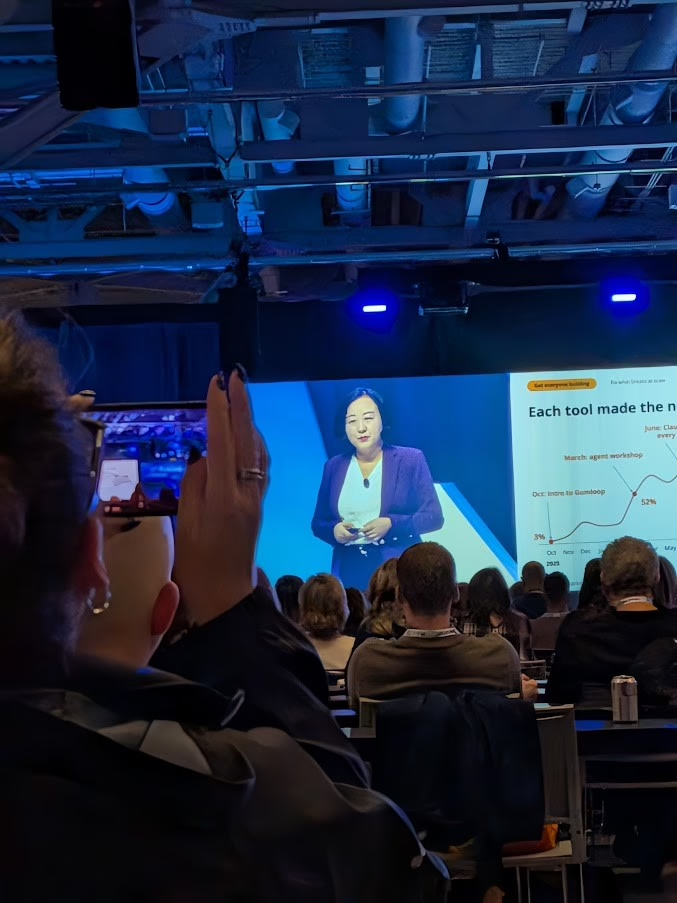
You can outsource the work. You cannot outsource the accountability.
Andrew Yang closed the main-stage day by widening the question again. If AI makes organizations more productive and technology companies more valuable, how do those gains reach the people whose livelihoods are changing?
His keynote connected automation with employment, education, economic security, and the institutions expected to help society adjust.
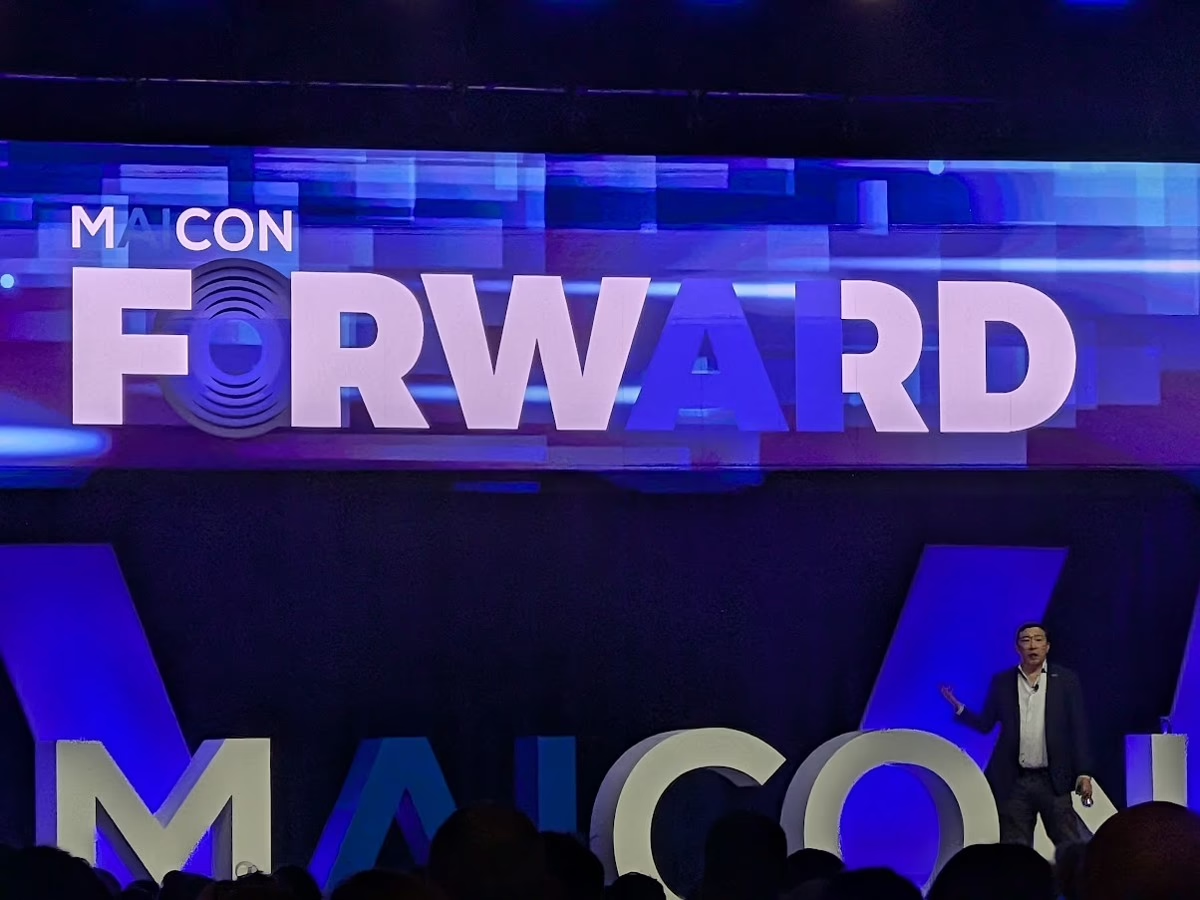
Yang argued for a human-centered economy that places greater value on caregiving, community wellbeing, and creative work. He discussed universal basic income and shifting more of the tax burden toward automated capital, presenting policy choices he believes could help distribute the benefits of technological progress.
His larger challenge, however, was harder to leave at the convention center: an economy can become more productive while many people feel less secure about their place in it.
That concern has particular resonance in Northeast Ohio, where economic transformation is part of the region’s lived experience. Discussions about jobs, institutions, and community have a local weight here.
Yang also raised concerns about young people outsourcing too much of their thinking and relationships to AI. It was a useful connection to the educational questions running through the day. How can we best prepare future leaders to use these tools while helping them develop the confidence and judgment to act for themselves?
MAICON deserves credit for making room for that broader discussion alongside its implementation stories. An honest conversation about AI has to include what happens beyond the marketing department.
On the Expo floor, a conversation about being found and believed
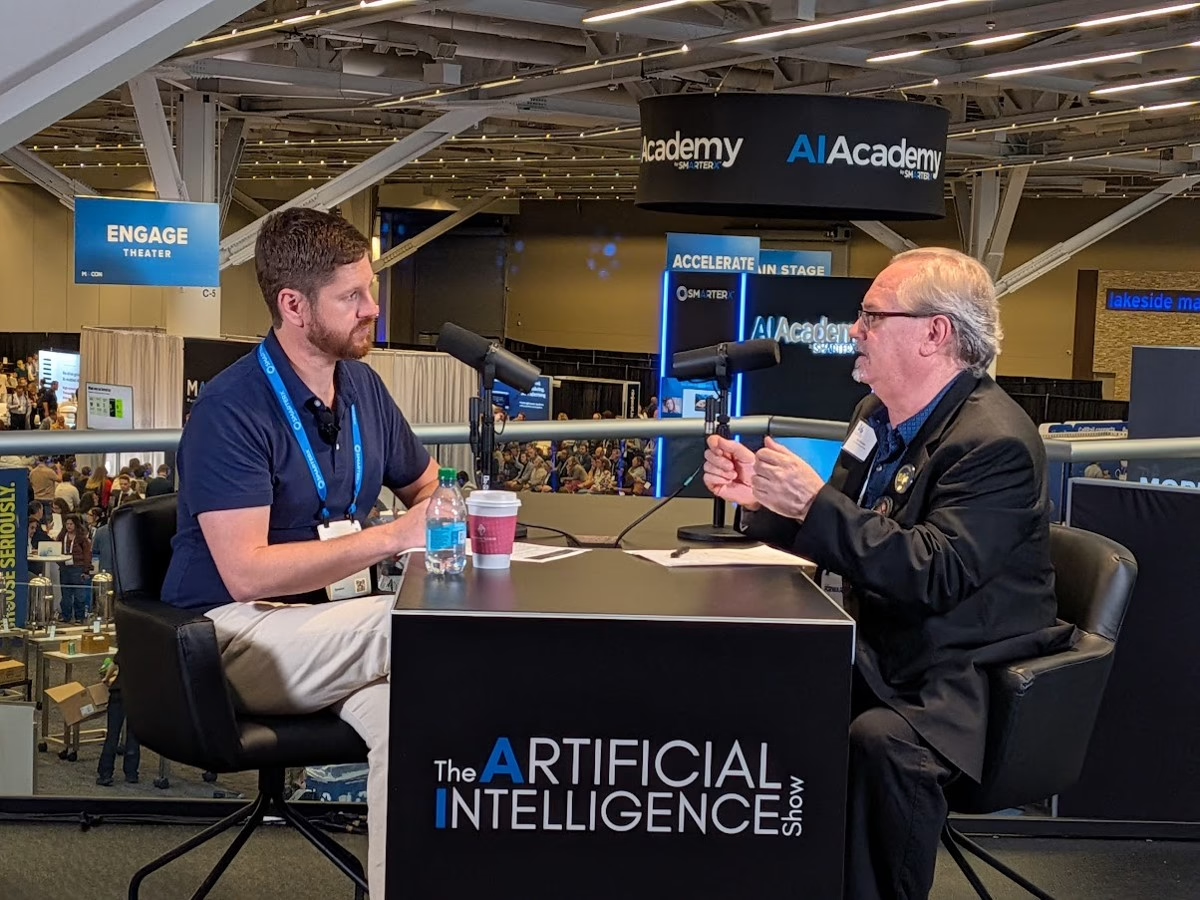
At the Seer Interactive booth, I spoke with Alisa Scharf, the agency’s chief AI officer, about what happens as search moves toward personalized recommendations. A list of links gives people options to investigate. A recommendation can arrive with the apparent confidence of an assistant that knows something about the person asking.
Scharf emphasized how early this field remains. She sees opportunity in testing now, while acknowledging that a lasting advantage for early movers has yet to be established.
Her practical advice started with fresh content that offers a distinct point of view, alongside close attention to what customers and other sources say about a brand. A company’s own description of itself is only part of the information an AI system may draw upon.
We also discussed a new kind of website visitor: an agent navigating on someone’s behalf. A site designed for humans may contain steps that confuse or block that agent. Brands now have another reason to look carefully at whether their digital experience makes sense.
Scharf kept the conversation grounded in human behavior, including the possibility that people will continue to enjoy doing things themselves. That is a worthwhile consideration in an industry that sometimes treats every available automation as an inevitable future habit.
The educators are here, and they have questions
I spoke with several educators working to build their own AI skills while simultaneously helping students prepare for a changing workplace.
Among them was Heather Vaughn, who co-hosts Not 4 Credit with John Mims at High Point University’s Nido R. Qubein School of Communication. Vaughn emphasizes to her students that AI is a tool. That starting point keeps attention on the person using it and the choices they make.
It connected with Roetzer’s apprenticeship question and with Rick McCawley’s interview with Mike Kaput. Rick brought an educator’s concerns to that conversation: students seeking opportunities, the skills employers will value, and how to help people maintain ownership of their thinking. Kaput discussed the value of learning to build useful things with AI and demonstrating how those skills can solve a business problem. Rick’s full interview with Mike is coming soon on Rick’s YouTube channel.
A little permission to put the phone down
Another conversation worth sharing came from the live taping of Paul Roetzer and Mike Kaput’s podcast discussion about AI burnout. There is something reassuring about hearing people whose work requires them to follow this field acknowledge the exhaustion of keeping up with it.
They discussed protecting time away from AI, allowing yourself to finish for the day, and resisting the urge to compare your progress with everyone else’s elaborate setup. You can catch the full episode by subscribing to The Artificial Intelligence Show.
Yes, the swag deserves a spotlight
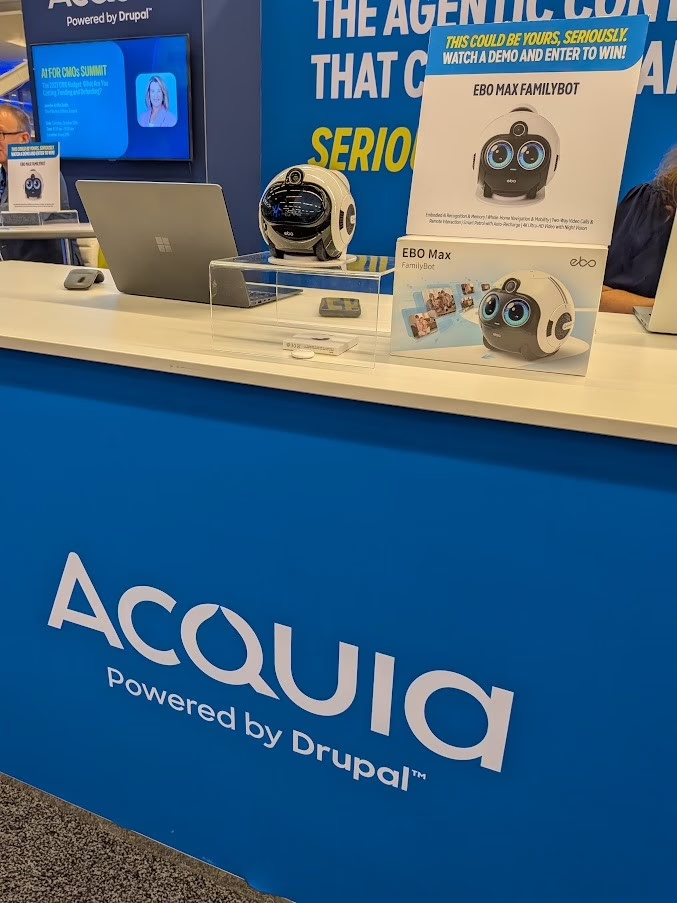
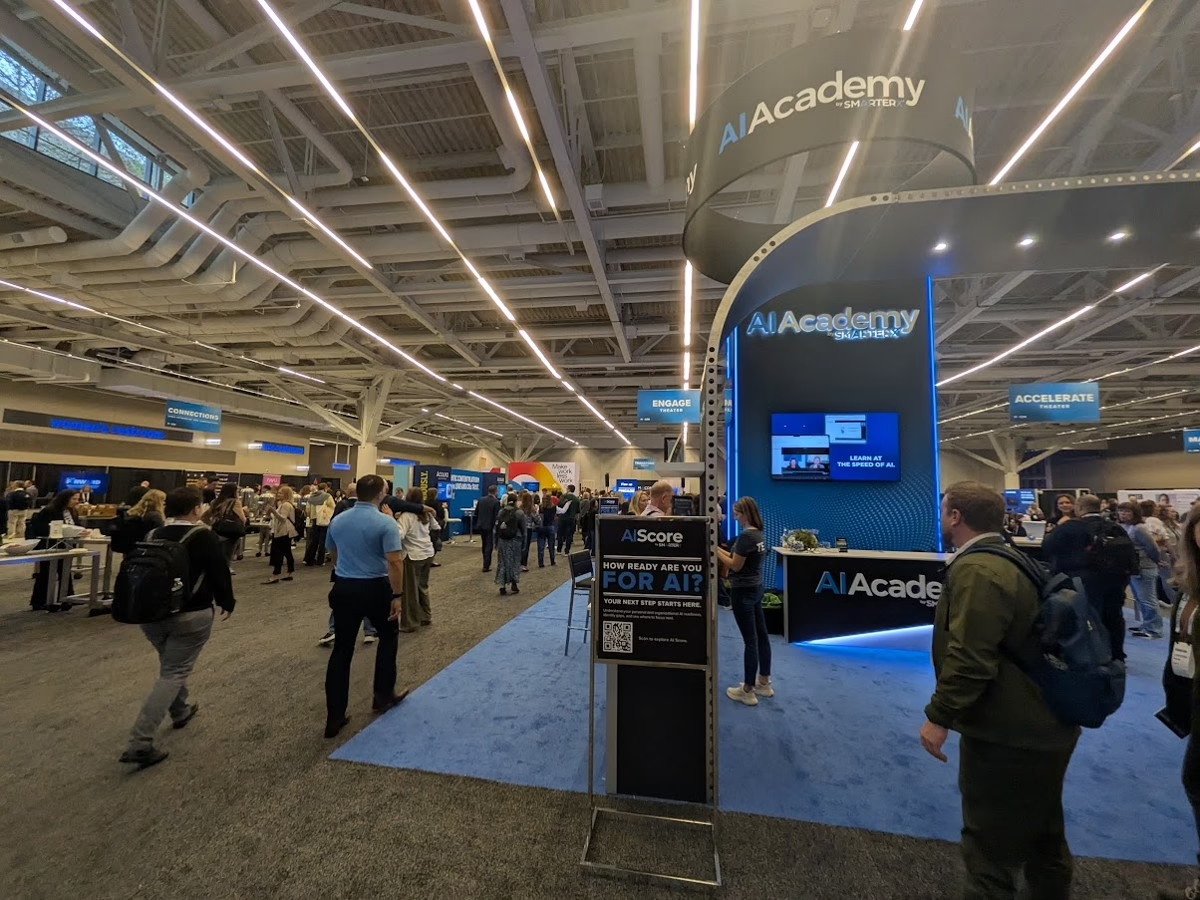
The sponsors came prepared. Socks, bags, robots, Rabbit R1s: the swag and gadget game was strong. There was plenty on the expo floor to catch attendees’ eyes between sessions, and ample reason to stop and start a conversation.
The food continues to be a MAICON strength, too. After a day of collecting ideas, our AI-matched networking dinner gave us time to sit down and actually talk them through.
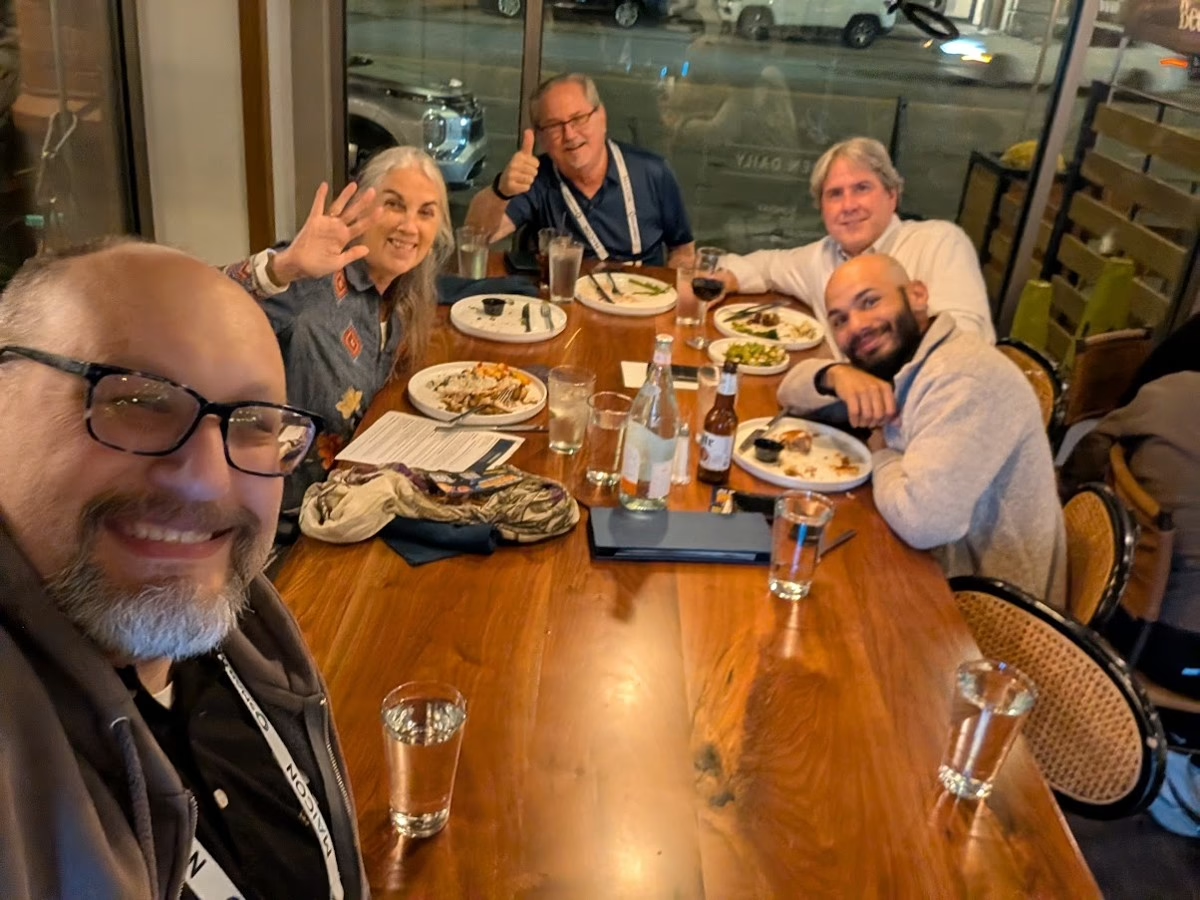
AI helped make the match. The conversation happened around the table. Photo: Brandon Tidd.
I love these round table discussions. Someone else can ask the question you had not thought to ask, share an experience that changes your interpretation, or simply make the whole thing feel more manageable, and Cleveland is a good place to have those conversations. Between a convention center full of global expertise and a table of people comparing notes, the city is hosting a very practical discussion about the future.
It was a fitting end to the first full day of MAICON. After hours of discussing increasingly capable machines, the conversation kept coming back to what people need: a way to learn, a chance to contribute, and someone willing to help them figure out what comes next.
Cleveland has plenty to say about that.
Thursday, the conversation continues
There was more on Wednesday’s program than any one person could cover. Sessions on research, trust, AI search, workflow design, and the people needed to support transformation reinforced the breadth of the questions being explored.
Thursday’s schedule gives us plenty more to follow, including Karen Hao’s conversation with Roetzer about Empire of AI, Kaput on AI-native content teams, hands-on build sessions, and Dan Slagen on helping marketers become builders.
If you are following from elsewhere, the MAICON 2026 On-Demand Bundle offers recordings of selected main-stage and featured sessions. Check the included-session list for the talks you want to explore. There is a lot here that merits more than one pass through your notes.
What idea would you like us to dig into? What would make this technology more useful in your work, your classroom, or your creative life? Bring those questions. We’ve got another full day ahead.
Join the free AI Salon community to follow our MAICON coverage and join the conversation.